





PCI Compliance for Thrift Stores: 2026 Guide + Checklist
Your thrift store layout and merchandising are critical to increasing customer dwell time (the time a consumer spends in your store) and boosting sales.
If you’re having trouble keeping shoppers in your store, or if you’d like to improve your retail space to attract more customers and encourage more purchases, keep reading for our top thrift store layout ideas to transform your space today.
Most Common Thrift Store Layouts and Designs
Before we get into the tips and FAQs about thrift store layouts, let’s start with the most common thrift store layouts and designs:
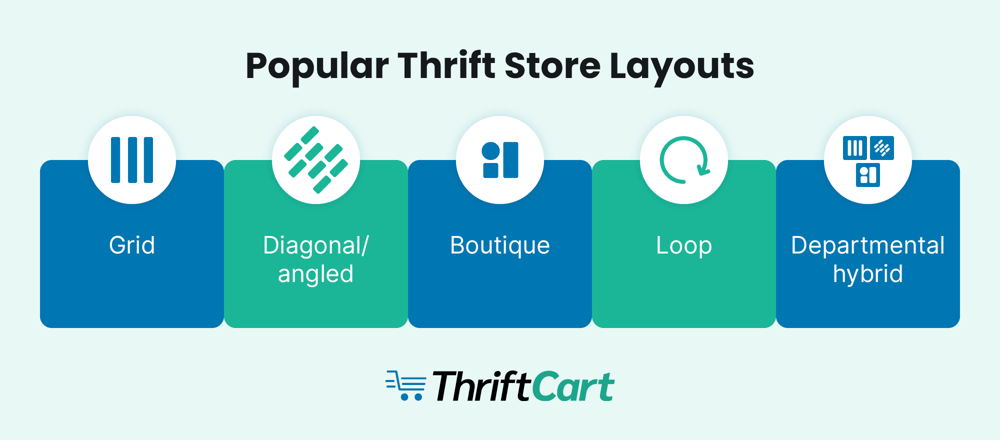
Grid
-
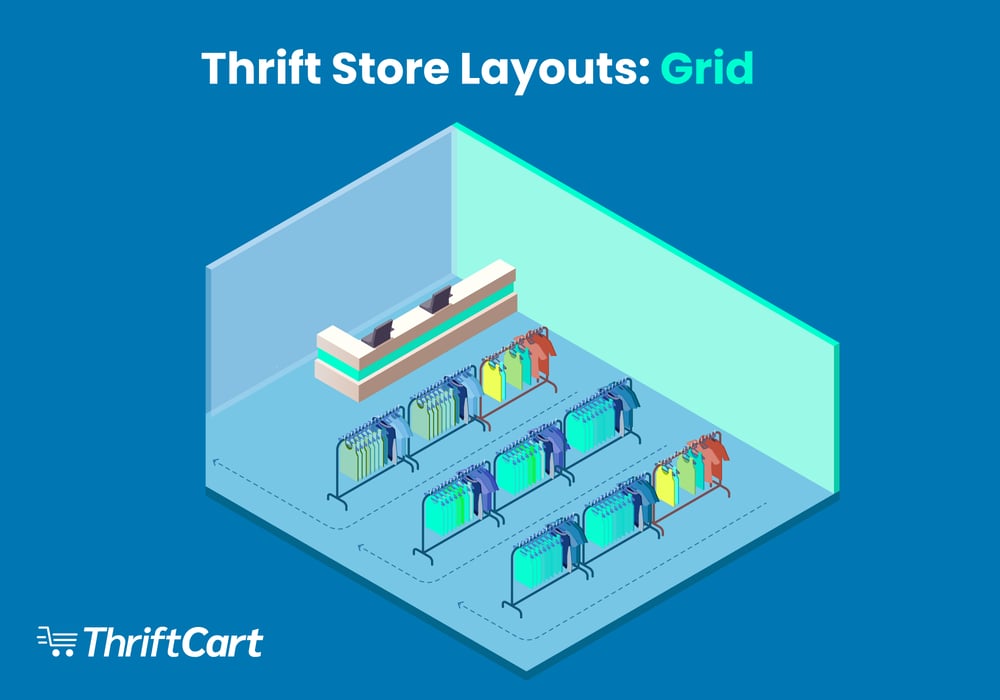
Best for: Clothing-focused thrift stores and budget-conscious stores
-
What it looks like: Long, parallel aisles that run perpendicular to the entrance
-
Benefits for thrift stores: Maximum product density, cost-effective, very familiar to customers, easy for staff to restock, easy to create end caps and wall displays
-
Drawbacks for thrift stores: Can be boring, visual fatigue
Diagonal or Angled
-
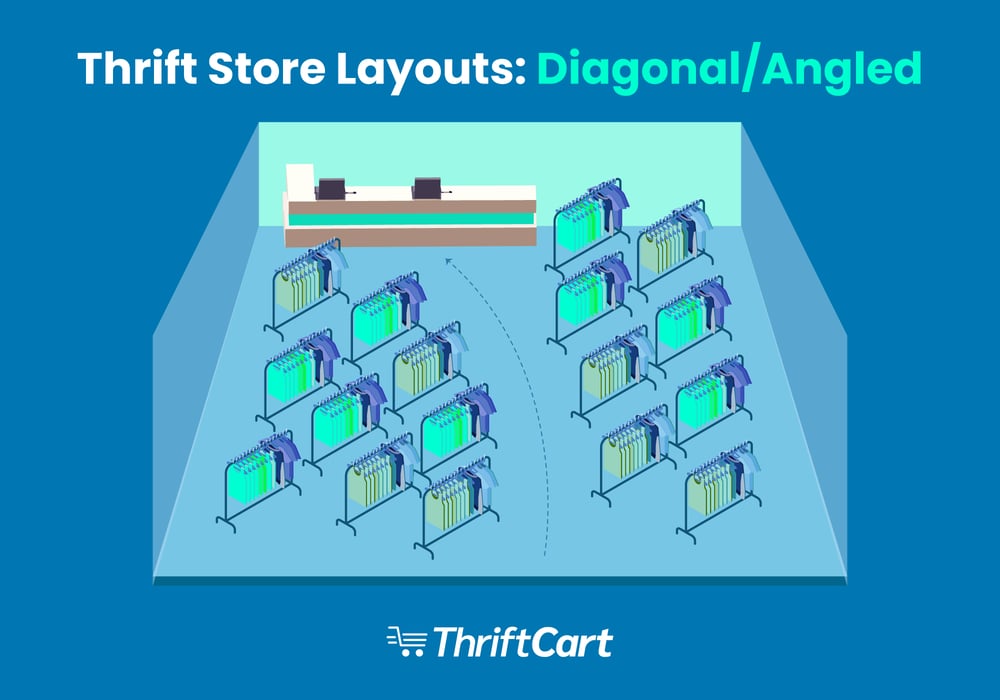
Best for: Compact thrift stores with a wide variety of small items and limited space
-
What it looks like: Instead of straight aisles, racks are set at 45-degree angles
-
Benefits: Opens up central sightlines, guiding shoppers in a weaving pattern to expose them to more products and allowing a single staff member to monitor the entire floor for loss prevention
-
Drawbacks: Customers who are more accustomed to grid layouts may have difficulty navigating
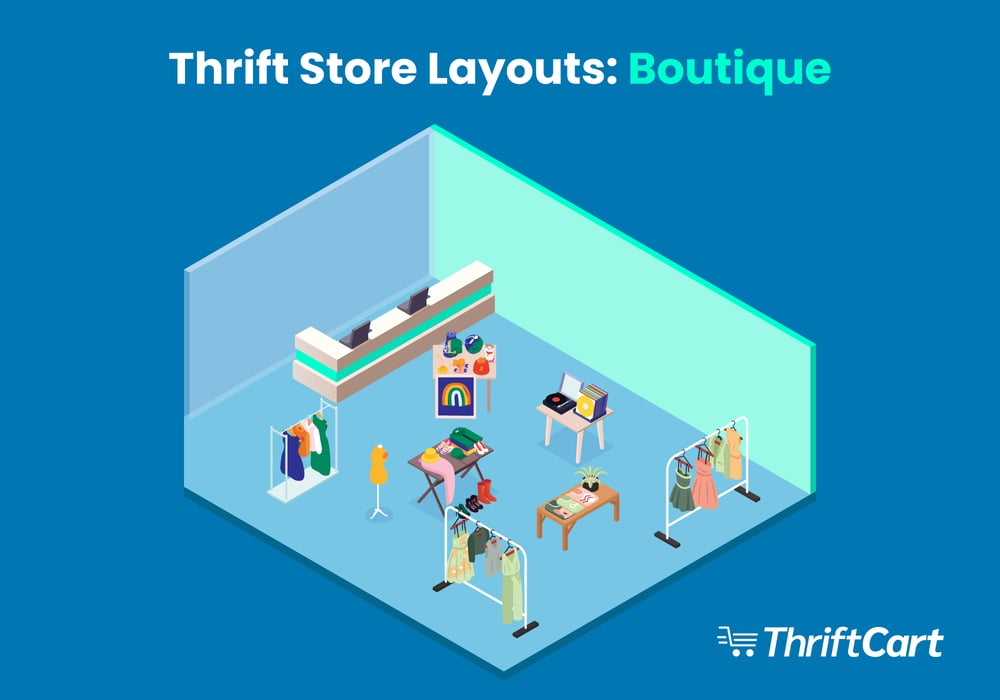
Boutique
-
Best for: More curated or vintage and antique-focused thrift stores
-
What it looks like: A seemingly random placement of rounded racks, tables, and vignettes to encourage wandering and exploration
-
Benefits for thrift stores: It eliminates the “industrial” or “sterile” feel that certain thrift stores have, gives employees room for creativity, and can inspire more exploration and purchases from customers
-
E.g., Employees can group items into story-based vignettes (such as a vintage desk paired with a lamp, chair, and knick-knacks) to help shoppers visualize items in their own homes
-
-
Drawbacks for thrift stores: Very space inefficient, high maintenance, high labor costs (requires a design/curatorial eye to maintain)
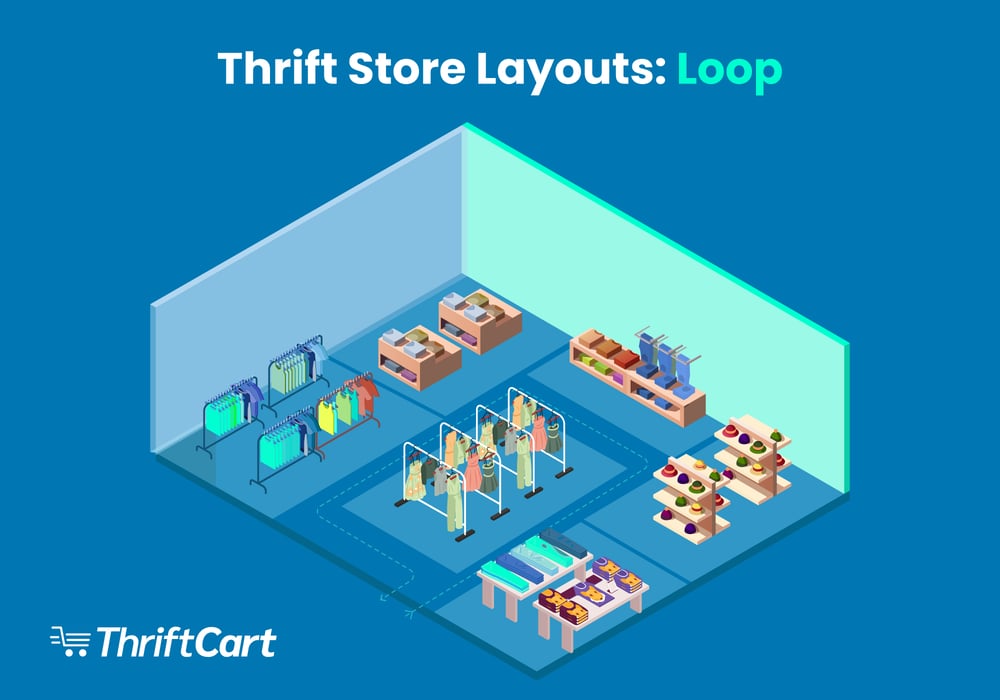
Loop
-
Best for: Large thrift stores with multiple departments
-
What it looks like: A clear path circles the entire store, leading customers past every department before they reach the checkout
-
Benefits for thrift stores: Increases exposure to products and ensures customers move through sections they might otherwise skip
-
Drawbacks for thrift stores: Customers may feel forced to take the long route and get frustrated, congestion or traffic jams can occur if the main path isn’t wide enough
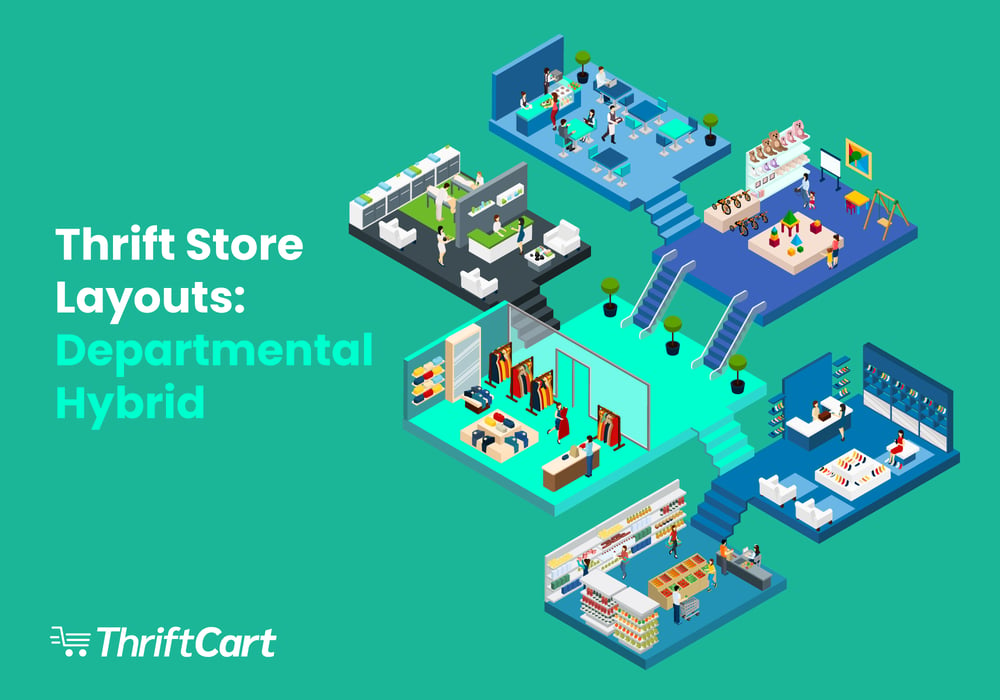
Departmental Hybrid
-
Best for: Large thrift stores with distinct departments
-
What it looks like: Each department follows its own layout style
-
Benefits for thrift stores: Efficient restocking for staff, allows customers to clearly browse what they’re interested in, reduces decision/thrifting fatigue in customers
-
Drawbacks for thrift stores: Difficult to execute, may have inconsistent signage, may be expensive to execute
7 Thrift Store Layout Tips
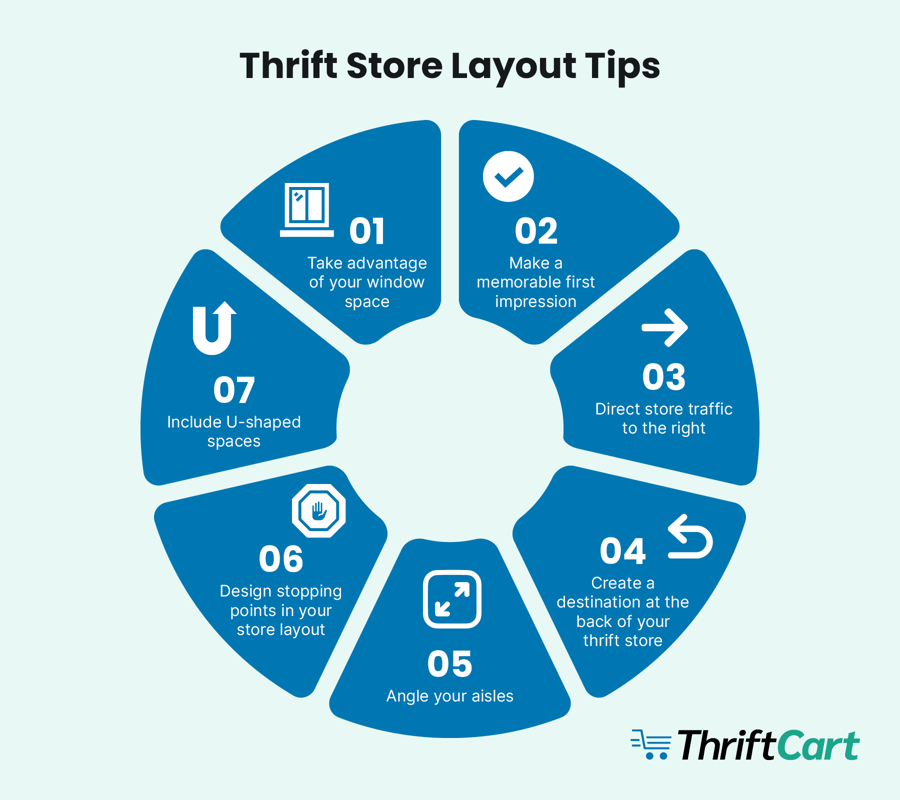
Want to enhance your thrift store’s appeal and encourage longer browsing times? These seven thrift store layout tips, complete with implementation best practices, can transform your store and drive sales. From captivating window displays to strategic aisle arrangements, here’s how to create an engaging shopping environment for your customers.
1. Take Advantage of Your Window Space
Your store windows are the first thing your customers see when they visit your thrift store, so they need to catch their attention. Like store design and display consultant Linda Cahan says, “Just like your eyes are the windows of your store, windows are the eyes of the store.”
Implementation Tip
Start by decluttering your window displays. Choose a single color theme or a specific story, such as “Vintage Summer,” and select a few standout items like a retro dress or unique accessories to feature. You can do this by rearranging existing items and adding a simple backdrop to enhance focus. Pull items from your store’s collection that match — design a collection of primary color items that give your display windows a pop.
2. Make a Memorable First Impression
Once customers enter your thrift store, attractive displays can draw them in further. Create memorable focal points — find ways to slow customers down so they don't rush through your store or just browse. Consider setting up a display of rare collectibles or seasonal items that customers can stop and admire.
Implementation Tip
Create a show-stopping display right at the entrance. Use donated items you already have, like a collection of colorful scarves or a themed display of retro kitchenware. Arrange them creatively on a table or shelf to catch the eye of every customer who walks in.
3. Direct Store Traffic to the Right
Studies show that most people walk to the right as they enter a store because most people are right-handed. Design your store to draw shoppers to the right side of your entryway. After you direct customers this way, find a natural flow for them to follow around your thrift store.
Implementation Tip
Rearrange your entrance to guide customers to the right. Prominently place a rack of new arrivals or a sale section on the right side to entice customers to start their shopping journey there. Use eye-catching signs or arrows to subtly direct foot traffic in that direction.

4. Create a Destination at the Back of Your Thrift Store
Do you have compelling displays at the end of your aisles? Use the back of your store as a destination. You can set up collections of products that draw your customers deeper into the store.
Implementation Tip
To keep customers moving further into your thrift store, make an inviting space where they can sit and relax. For instance, set up a cozy reading nook with donated books and vintage furniture. You can collect sofas, tables, and accessories that pair well to inspire your customers to buy more items together. This way, you increase your average transaction value.
5. Angle Your Aisles
Create more visual interest by angling the aisles. This thrift store layout idea guides customers through the store in a more engaging way. Make sure your aisles are wide enough for easy navigation, though — especially if your thrift store often receives large donations that need to be displayed creatively.
Implementation Tip
Experiment with angling your aisles to create a more dynamic flow. Use portable racks or tables to create an arrow layout that guides customers to a featured display at the back of the store. This layout will naturally guide customers through your store and encourage them to browse more of your merchandise. The primary goal of an arrow layout is to control customer flow and encourage them to see as much of the store's merchandise as possible.
6. Design Stopping Points in Your Store Layout
Long, uninterrupted aisles don’t grab people’s attention. Your thrift store needs natural stopping points to break up the space. Crossroad displays are strategically placed at intersections or high-traffic areas to encourage impulse purchases and increase visibility. These displays capture attention and lead customers to explore other products they may not have initially planned to buy.
Implementation Tip
Try using a small table with a themed display of curated items to separate a long aisle. For example, you can set up a “Back to School” display with donated school supplies and clothing. Use signage to highlight these stopping points and draw attention.
7. Include U-Shaped Spaces
People tend to prefer round and U-shaped spaces. Get shoppers to stop at displays by creating a U-shaped background. This layout encourages people to enter the space, reminiscent of a person extending their arms for a hug. Use this for special collections or themed sales.
Implementation Tip
Create a U-shaped display using existing furniture or racks. This could be a bargain-bin area where customers can find hidden gems. Use a circular sign above to draw attention and invite customers to explore.
Thrift Store Layout FAQs
What is a “decompression zone,” and do I need one in my thrift store layout?
Yes. The decompression zone is the first 5-10 feet of space inside your door. Shoppers use this area to adjust to your thrift store’s lighting and scent. Avoid placing your best items or sale bins here, as shoppers may walk right past them without noticing.
Where is the best place for the checkout counter?
The front left (as you face the back of the store). Because most shoppers instinctively turn right upon entering, placing the counter on the left ensures they complete a full loop of the store before reaching the register. It also acts as a security checkpoint for the exit.
Where should fitting rooms be located in my thrift store layout?
Ensure fitting rooms are clearly visible from the checkout counter or a designated staff station. This way, staff members can keep an eye on customers entering and exiting the fitting rooms to deter theft and answer questions. Consider also providing a large mirror outside the fitting rooms so customers can see themselves wearing the clothes, reducing the time they spend in low-visibility areas. If your thrift store sells more than just clothing, make sure the fitting rooms are located in the clothing section.
How do I make my thrift store feel like a boutique?
The key to making a thrift store feel like a boutique is to elevate your store’s aesthetic and experience. Thrift stores are often associated with cluttered, musty spaces. Turn that perception on its head by carefully selecting your best items for specific-themed displays, such as a prom dress display or a summer style display. Make the store feel fresh and clean with natural lighting, high-quality oil diffusers, and easy-listening music. Additionally, soften your store by using a variety of textures, like antique wood furniture and soft rugs, rather than just metal racks.
How do I highlight certain items without them getting lost?
Change the item's orientation to make it stand out. For example, in a clothing aisle, most items are shoulder-out, so shoppers just see the side. Interrupt this pattern with an outward-facing hanger displaying prime items every five to seven feet of rack. For physical items like furniture or kitchenware, you can set them up in vignettes so customers can visualize how they might look in a home. For instance, if you wanted to showcase an antique tea set, you could lay it out on a table, with a frilled tablecloth and sturdy wooden chairs.
How should I lay out my thrift store to make donation drop-offs easier for donors?
Keep the donation drop-off area separate from your curated sales floor. If you have access to a side or back door for donations, use that. Add clear signage directing donors to the right area in case they try to take their items through the main store. If you have a smaller store or no side doors, set up a walled-off area in your main store dedicated to donation intake and processing, so cluttered donation piles aren’t visible to shoppers.
You can also make donations more convenient for donors by accepting curb-side drop-offs, where all they have to do is pull their car up to a designated area, and a staff member will greet them and take their donations.
How ThriftCart Assists With Thrift Store Layout
ThriftCart offers features that make it easier to manage your thrift store. With integrated donation scheduling, customizable barcoding, and pickup route planning, you can simplify your thrift store workflow and focus on creating an engaging shopping environment.
Color-coded barcoding also helps organize your thrift store by allowing you to quickly identify and categorize items, making inventory management more efficient. This way, you spend less time sorting and locating products.
Schedule a demo today to see our industry-specific solution in action and to discover how we can help grow your thrift retail business.

Additional Resources
Thrift store layout and merchandising tactics have been used by traditional store owners for years — these tried-and-true methods will not only entice customers to stay longer but also to spend more. By implementing these layout strategies, you can make your thrift store more inviting, offer a more engaging customer experience, and potentially increase sales.
Looking for additional resources to optimize your store? Start here:
-
Thrift Store Inventory Management: 7 Tips and Tricks + FAQs. Streamline inventory management from donation intake to strategic pricing with the tips in this guide.
-
Thrift Store Pricing: How To Be Affordable and Profitable. Learn how to price items effectively in your thrift store to balance affordability and profitability.
- What’s the Best POS System for Thrift Stores? 13 Top Picks. Review the top POS systems to find the solution that best suits your thrift store.

With three years in the thrift industry during a pivotal shift to omnichannel selling, Kyle Payton helps stores better manage inventory and forecast product needs. As General Manager at ThriftCart, he focuses on equipping nonprofit thrift operations with point of sale technology that makes their day-to-day operations easier.
Kyle's passion lies in helping thrift store managers embrace digital solutions that support their unique mission and maximize their impact in the community.
"Supporting nonprofits is incredibly rewarding. I’m here to provide thrift store managers with the tools they need to thrive, so they can continue making a positive difference in their communities."