






PCI Compliance for Thrift Stores: 2026 Guide + Checklist
Thrift store donation management doesn’t follow a predictable schedule.
Donors show up unannounced on Saturday mornings with carloads of furniture. Bags get left at the back door overnight. A volunteer sorts a pile of clothing and guesses on prices because there’s no system to guide them.
By the time items make it to the floor, days have passed and the backlog is already building again.
Generic donor customer relationship management (CRM) tools and retail systems weren’t built for any of this. Donation management software designed for thrift stores addresses the full intake cycle, not just purchases.
This blog covers the five features that actually reflect how thrift operations work, and what to look for when choosing the right software.
5 Donation Management Software Features Thrift Stores Actually Need
Most retail software is designed around predictable inventory — ordered, labeled, and priced before it arrives. The right donation management software accounts for how thrift stores truly operate. Each feature below addresses a specific breakdown point in the donation cycle.
1. Donation Pickup Scheduling and Route Planning
Not every donor has the time or ability to drop off items in person. Offering scheduled pickups expands your donor pool and helps you pull in higher-quality items, but only if the process is organized enough to manage.
Without a route planning tool, pickup days turn into a logistical mess. A thrift-specific point of sale (POS) system with built-in route scheduling fixes that. Donors sign up for available slots online, and the system maps the most efficient route automatically.
Here’s what that looks like in practice:
- Drivers stop crisscrossing the same neighborhoods and missing time windows.
- Automated confirmations and reminders cut down on wasted trips.
- Clear donation guidelines shared during scheduling set expectations before the driver arrives.
For stores running multiple pickup days a week, this feature alone saves hours of coordination time.
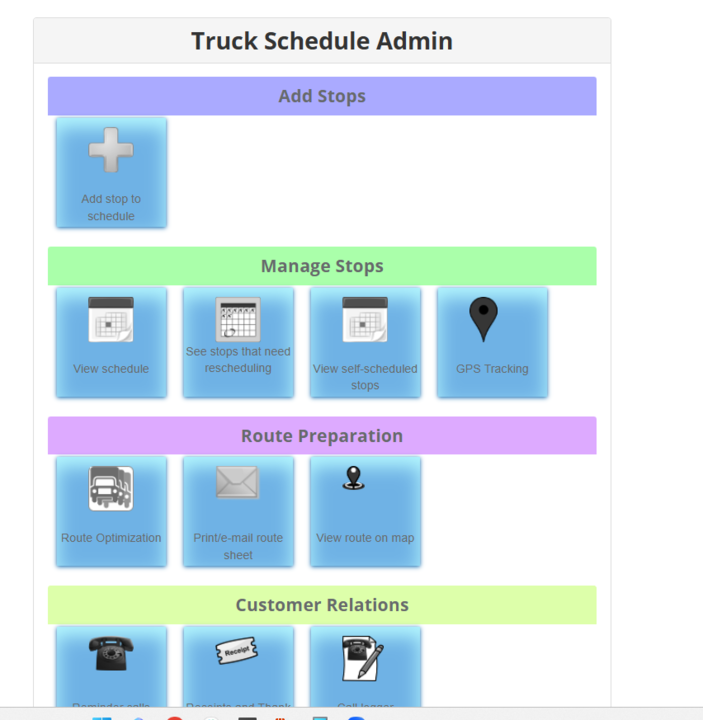
This is a screenshot of ThriftCart’s donation pickup interface. You can customize your schedule, plan direct routes, and keep in touch with customers.

2. Donor Tracking and Communication
A donor who gives once can become a donor who gives regularly, but only if you stay in touch. Most thrift stores don’t have a system for that, so repeat donors slip through the cracks.
Donor tracking inside a POS like ThriftCart lets staff log each contribution — dropoff or pickup, what was brought in, and when. Over time, you build a profile for each donor that shows their history and frequency. When someone who used to donate regularly goes quiet for a few months, you can send a personal follow-up rather than hoping they come back on their own.
Rob Tart, CEO of Durham Rescue Mission in North Carolina, chose ThriftCart specifically for this reason. He says the ability to communicate with donors and pull clean data was what made the difference.
Stores that track donor behavior also gain an edge when it comes to avoiding bad donations — knowing what a donor typically brings in helps staff anticipate quality before the items arrive.
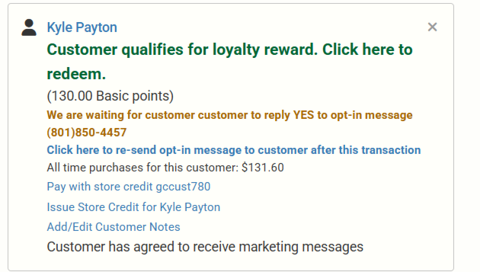
This image comes from ThriftCart’s customer tracking feature. You can view loyalty points, communication threads, all-time purchases, and leave notes.
3. Volunteer Coordination
Most thrift stores run on volunteer labor, and managing that workforce without the right tools creates real problems. Volunteers need POS access to process sales, but handing over full system access is a security risk.
Thrift-specific donation management software handles this with a few built-in safeguards:
- Custom volunteer logins with restricted access let staff ring up sales without touching reports or donor records.
- Store managers set permissions by role, so every person only sees what they need to.
- Built-in text and email tools keep shift reminders and sign-up forms in one place, no separate app required.
For stores that rely on a rotating volunteer base, this reduces administrative burden without disrupting daily operations.
Related Read: Training Volunteers on POS Systems: 5-Step Thrift Store Guide
4. Thrift-Specific Inventory Management
When a shipment arrives at a traditional retailer, it comes organized, labeled, and priced by the vendor. When donations arrive at a thrift store, they come in garbage bags and cardboard boxes with no labels, no prices, and no organization. Every item needs to be sorted, priced, tagged, and assigned to a category before it hits the floor.
Without the right tools, volunteers guess on prices and handwrite tags. It’s slow, inconsistent, and impossible to track at scale.
Kaitlyn Sandel, manager of Youth Homes Thrift Shop in San Francisco, says she can print 50 tags in under 30 seconds with ThriftCart and tag around 1,000 clothing items in a single day — a volume that simply wasn’t possible before.
Color-coded tag printing takes this further by supporting automatic discount scheduling. One tag color goes on sale this week, another next week. Staff don’t have to reprice anything, and category-level tracking gives you visibility into what’s moving and what isn’t.
Related Read: Thrift Store Pricing: How To Be Affordable and Profitable
5. Sales Reporting and Donation Metrics
Revenue reports alone won’t tell you what you need to know about how your thrift store is performing. You also need donation-specific data to make smarter decisions about what to ask for and where to focus your team’s energy.
The right system tracks metrics like:
- What percentage of donated items are actually sellable
- How long it takes the average item to move off the floor
- Which categories generate the most revenue relative to intake volume
If electronics sit for months while clothing sells in days, you can adjust your donor outreach accordingly. If one location moves donations faster than another, you can identify what’s working and apply it across the board.
Stores that use their data well tend to maximize profits more consistently than those flying blind.
Justina Torres at Durham Rescue Mission describes ThriftCart’s reporting as accurate, easy to navigate, and straightforward to train with.
For multilocation operations, the ability to view data across stores with customizable filters makes overseeing the full operation from one place a lot more manageable.
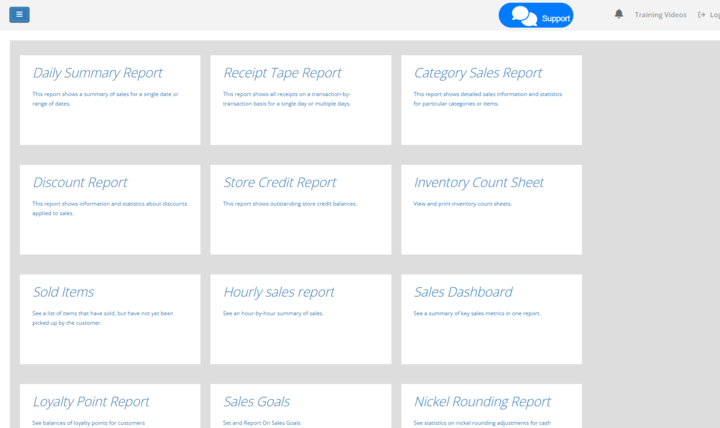
The image above shows ThriftCart’s report interface. You can view a variety of reports and customize views to draw useful insights from data.
Related Read: Thrift Store Accounting Software: 7 Best Solutions
How ThriftCart Handles the Full Donation Cycle
ThriftCart is a cloud-based POS built specifically for thrift stores and nonprofit resale operations. Every stage of the donation cycle runs through one platform, from the moment a donor schedules a pickup to the day an item sells on the floor.
Here’s how it connects:
- Route planning keeps pickup days organized and efficient, so drivers aren’t wasting time or fuel.
- Donor profiles track contribution history and trigger follow-ups when regular donors go quiet.
- Volunteer logins restrict access by role so your team stays secure without slowing anyone down.
- Color-coded tagging and category tracking move items from intake to the floor faster.
- Reporting gives you the data to make smarter decisions about what donations to prioritize next.
Most thrift stores are leaving money on the table simply because their tools can’t keep up. Donations get misrouted, donors go uncontacted, and sorting backlogs eat into selling time.
The stores pulling ahead are the ones with a system that removes those gaps and keeps the cycle moving.
Build and price your custom ThriftCart plan and let the software handle the donation cycle your team doesn’t have time to manage manually.


With three years in the thrift industry during a pivotal shift to omnichannel selling, Kyle Payton helps stores better manage inventory and forecast product needs. As General Manager at ThriftCart, he focuses on equipping nonprofit thrift operations with point of sale technology that makes their day-to-day operations easier.
Kyle's passion lies in helping thrift store managers embrace digital solutions that support their unique mission and maximize their impact in the community.
"Supporting nonprofits is incredibly rewarding. I’m here to provide thrift store managers with the tools they need to thrive, so they can continue making a positive difference in their communities."