
00
Days
:
000
Hours
:
000
Minutes
:
000
Seconds

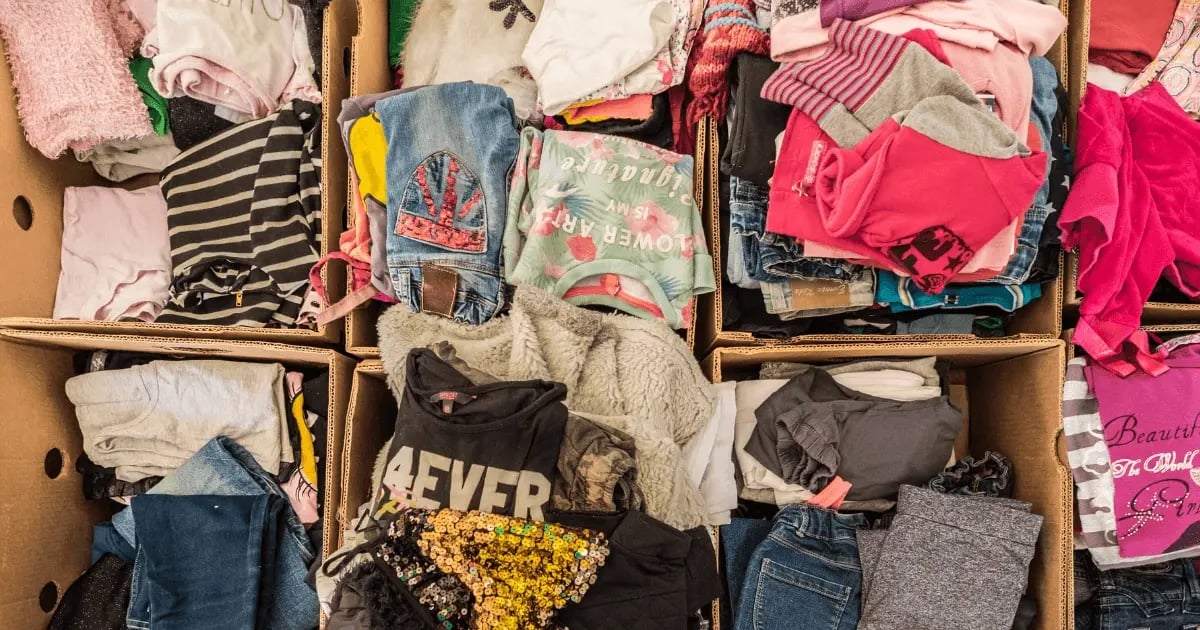
It’s a rallying cry in the world of nonprofits, encouraging community members to donate whatever they can spare — no matter how small.
However, this approach can hurt thrift stores more than it helps, leading to a warehouse full of unusable donations, absorbing countless volunteer and staff hours, and slowly draining funds.
That’s why we’ve created this comprehensive guide to reveal the hidden cost of bad thrift store donations and how you can prevent them. Here’s a peek at what we’ll cover.

How bad donations affect your thrift store’s finances, staff, volunteers, and customers
Common types and examples of bad donations
How to identify and politely decline low-quality donations before they enter your sorting area
The benefits of donation scheduling to prevent impulse donation dumping
How to craft a thorough donation acceptance policy to ensure your thrift store’s community understands your donation needs and criteria
Unfortunately, items that are broken, dirty, or otherwise unsellable don’t just disappear. You have to properly dispose of them — and that comes with a price tag.
Since you and your team don’t have time to trek back and forth to your city’s dump, you’ll have to budget for waste management services. The standard cost for rental and weekly pickup of an 8-yard storage container is around $200, an annual cost of over $10,000!
That’s before you factor in additional pickup fees for bulky items like worn-out furniture or old appliances that are considered hazardous waste.
You also have to consider the labor costs of bad donations. Thrift store employees usually spend at least 15 to 20 minutes sorting a large bag of donations, regardless of whether the items are sellable. For every hour an employee spends sorting fruitless donations, your thrift store is losing money.
If your thrift store offers donation pickup services, the potential financial costs get even higher. Fueling your collection trucks and employing drivers is expensive, and these transportation costs become losses if you don’t receive any sellable donations in return.
Bad thrift store donations don’t just hurt your bottom line; they also affect your team.
When unsellable donations pile up in your sorting area, it’s harder for team members to stay organized and maintain quality control. They’ll work more slowly and make more mistakes in the sorting process.
This barrage of bad donations can also frustrate your volunteers and staff, cancelling out the rewarding aspect of working for a thrift store. Eventually, you might face problems like volunteer burnout and high staff turnover.
Your team’s morale isn’t the only thing at risk either. Cluttered workspaces, broken furniture, rusted metals, and sharp objects can cause injuries — affecting your team’s health and your store’s insurance cost.

Your customers are also victims of bad thrift store donations. When they visit your store, they expect to find high-quality and gently used items at affordable prices — not to sort through shelves full of junk only to leave empty-handed.
Bad donations take up valuable processing time and floor space, causing revenue losses and decreased customer satisfaction.
Once your thrift store’s reputation as a treasure trove has been tarnished, it’s hard to earn back your community’s trust and business.
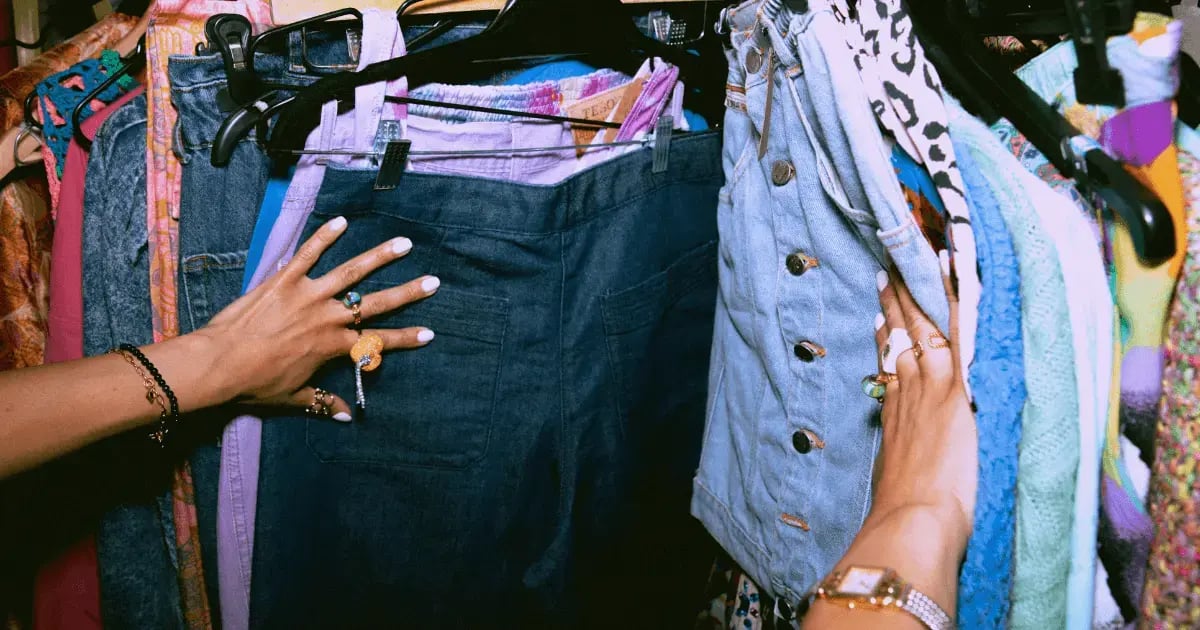
The first category is items that are damaged beyond repair. Here’s what this looks like for each donation category:
These items will either go directly into your dumpsters or take up valuable time and money to repair.

While some items might look as good as new after a simple cleaning, permanently stained or deeply soiled donations can lead to contamination or excessive cleaning workload.
Here are some common stains that aren’t worth cleaning:
These stains might even transfer to other clean donations, so it's best to dispose of them as quickly as possible.

Every item on your thrift store’s sales floor should be thoroughly vetted for safety. Here are some hazards to look for when sorting donations:
These items present a risk to your team and customers' safety.
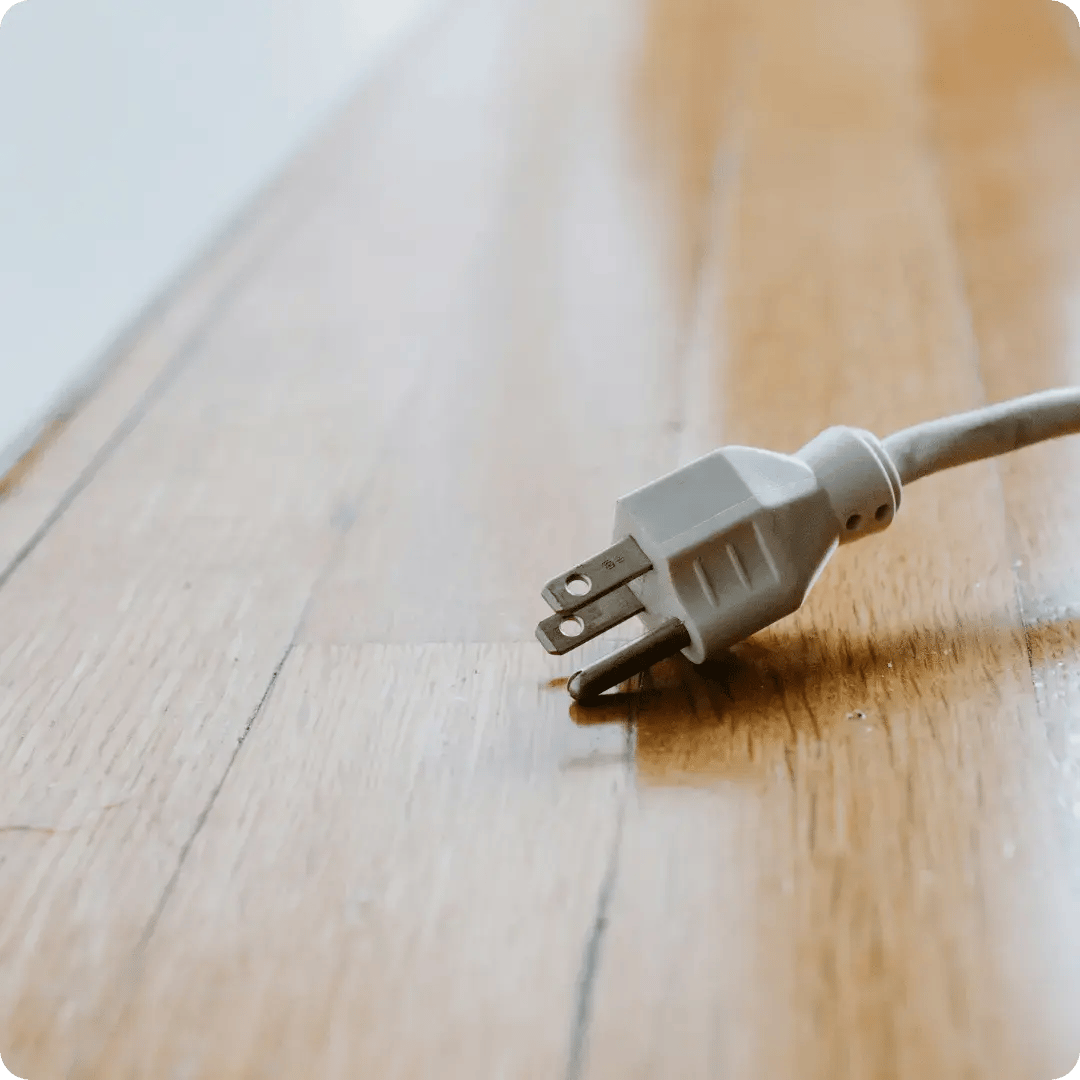
“Can someone use this item as is?”
This should be your team’s first question when receiving an item that appears to be missing essential components.
Here are a few examples of incomplete, useless donations:
If customers take these items home, they’ll be frustrated — and they might not come back to your thrift store.

Technology evolves rapidly — which means that tech donations are common but not always useful.
Learning to differentiate between valuable and obsolete items can prevent your thrift store from becoming a technology graveyard. Here are a few categories to avoid:
While some of these vintage items, like record players and video game consoles, might be collectible, the majority will just collect dust on your shelves.

Stopping these donations from hitting your shelves is good, but stopping them from entering your thrift store at all is even better.
That’s why you and your team should be able to quickly evaluate donation quality and politely decline bad donations during the drop-off process.
Here are some visual cues indicating less-than-ideal donation conditions:
Wet or torn garbage bags
Crushed or damp cardboard boxes
Storage containers with visible dirt or stains on the outside
Overstuffed and disorganized bags and boxes
Bad donations are a drain on your thrift store’s resources and a barrier to achieving your charitable mission.
So, what can you do about them?
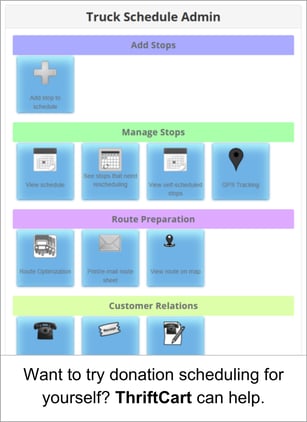
Fortunately, there’s one simple strategy that can transform your thrift store’s incoming donation quality: donation scheduling. In this chapter, we’ll dive into why donation scheduling works and the easiest way to set up a donation scheduling system.
We’ve covered the why behind thrift store donation scheduling — now let’s dive into the how.
Overhauling your thrift store’s donation process might sound like a tall order, so let’s break it down into four simple steps:
Decide what types of appointments to offer: Consider your donor’s habits and audit your available resources to determine whether you should offer drop-off appointments, pickups, or a combination of both.
Build your appointment calendar: Decide what hours to offer donation appointments and the length for each slot. We recommend blocking off between 30 and 60 minutes to gather information from donors, evaluate the items, and allow for a buffer between appointments.
Communicate with donors: Invest in an appointment scheduling system that lets you communicate with donors before and after their time slots, allowing you to gather information about the item types and quantities before and thank donors after they’ve left.
Create a donation appointment procedure: Plan trainings for your staff and volunteers to help them facilitate donation drop-off and pickup appointments efficiently.
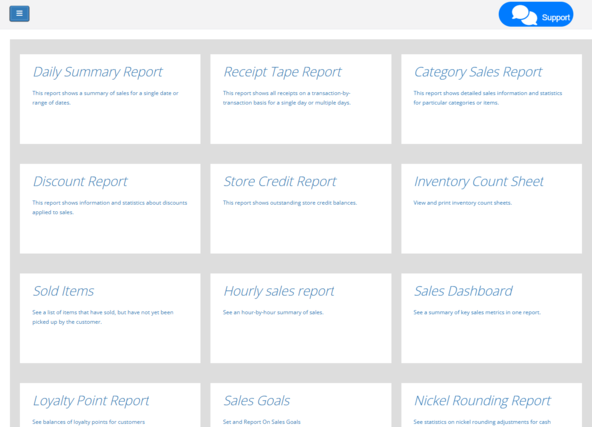
With ThriftCart's reporting tools, you can better understand your business.

Your thrift store’s donation acceptance policy should have two main sets of criteria: item category and item condition.
Let’s start with item categories.
The types of items you accept should be based on your thrift store’s unique mission and customer base. For example, some stores specialize in housewares, accepting everything from furniture to building materials. Others focus on providing customers with affordable, professional clothing, shoes, and accessories.
Regularly updating your list of item needs is critical — especially if your thrift store offers clothing. Customers’ needs will change with the seasons, like coats for the winter and sandals for the summer.
Your donation policy should also outline the ideal condition of donated items, providing donors with specific examples of items that are fit for donation. Here are a few examples:
Using positive, encouraging language can help you maintain a positive relationship with donors while still ensuring quality donations.
You might have the most thorough donation policy in the thrift store industry — but it’s no use if donors never see it.
Display your donation guidelines in multiple places, including:
A clear and highly visible donation policy makes it easier for donors to comply and give the right kinds of items.
.png?width=1200&height=630&name=TFC%20172025%20How%20To%20Keep%20Track%20of%20Charitable%20Donations%207%20Tips%20for%20Thrift%20Stores%20(SOCIAL).png)
Your staff and volunteers are on the front lines when it comes to evaluating thrift store donations — which is why they need to be experts on your acceptance criteria.
Along with covering the basics of your thrift store’s mission, the types of donations you accept, and item conditions, hold regular trainings for your team to help them feel confident in communicating and implementing your policy.
Hands-on training is the best way to help your team learn, so here are a few ways to make your trainings more fun and effective:
Above all, try to help your team strike the right balance between appreciating donors’ generosity and protecting your thrift store’s reputation for quality items at an affordable price.

“What isn’t measured isn’t managed.”
This popular saying is especially true when it comes to your thrift store’s donation quality.
Before implementing any of these strategies to improve the quality of incoming donations, you need to establish a baseline. Here are six key performance indicators (KPIs) to track.
Whether you decide to spruce up your donation acceptance policy or overhaul your donation scheduling system, tracking these metrics will help you determine the effectiveness of your efforts.
Percentage of unsellable donations: Tracks how many of your thrift store’s donations are disposed of rather than sold
Average processing time per donation: Represents how long an employee or volunteer spends assessing each donation before putting it onto the sales floor or disposing of it
Disposal expenses: Tracks how much money your thrift store spends on disposing of unsellable donations
Revenue per donated item: Breaks down your thrift store’s revenue by the overall number of donations received — not just the ones that made it onto the sales floor
Cost per donation: Calculates the average labor, transportation, storage, and disposal costs associated with each donation to your thrift store

