
Thrift store production management
Generic retail point of sale (POS) systems can’t handle unique items and one-of-a-kind donations — but ThriftCart can. Discover how purpose-built thrift store production management software helps your team work faster and smarter.
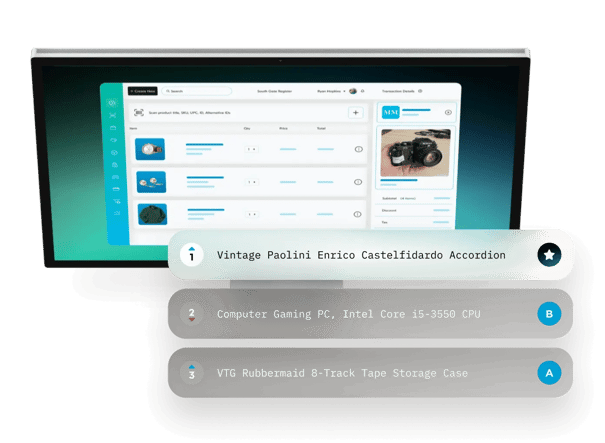
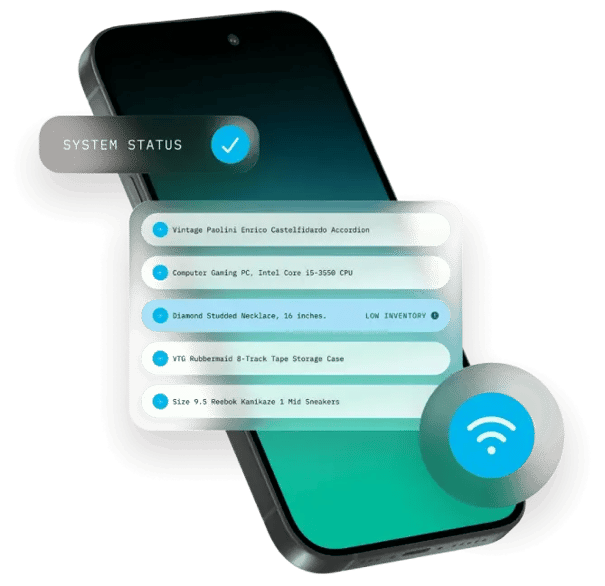
Track every item from donation to sale
Regular POS systems track inventory by SKU, assume consistent stock, and expect reorder points — but that’s not how thrift stores work. You need your thrift store software to:
- Simplify the donation intake process, log incoming inventory, and give each item a barcode label.
- Set pricing rules by department and let colored tag rotation handle automatic markdowns as items age on the floor.
- Update inventory records in real time as you make sales — and keep your online store up to date with available items.
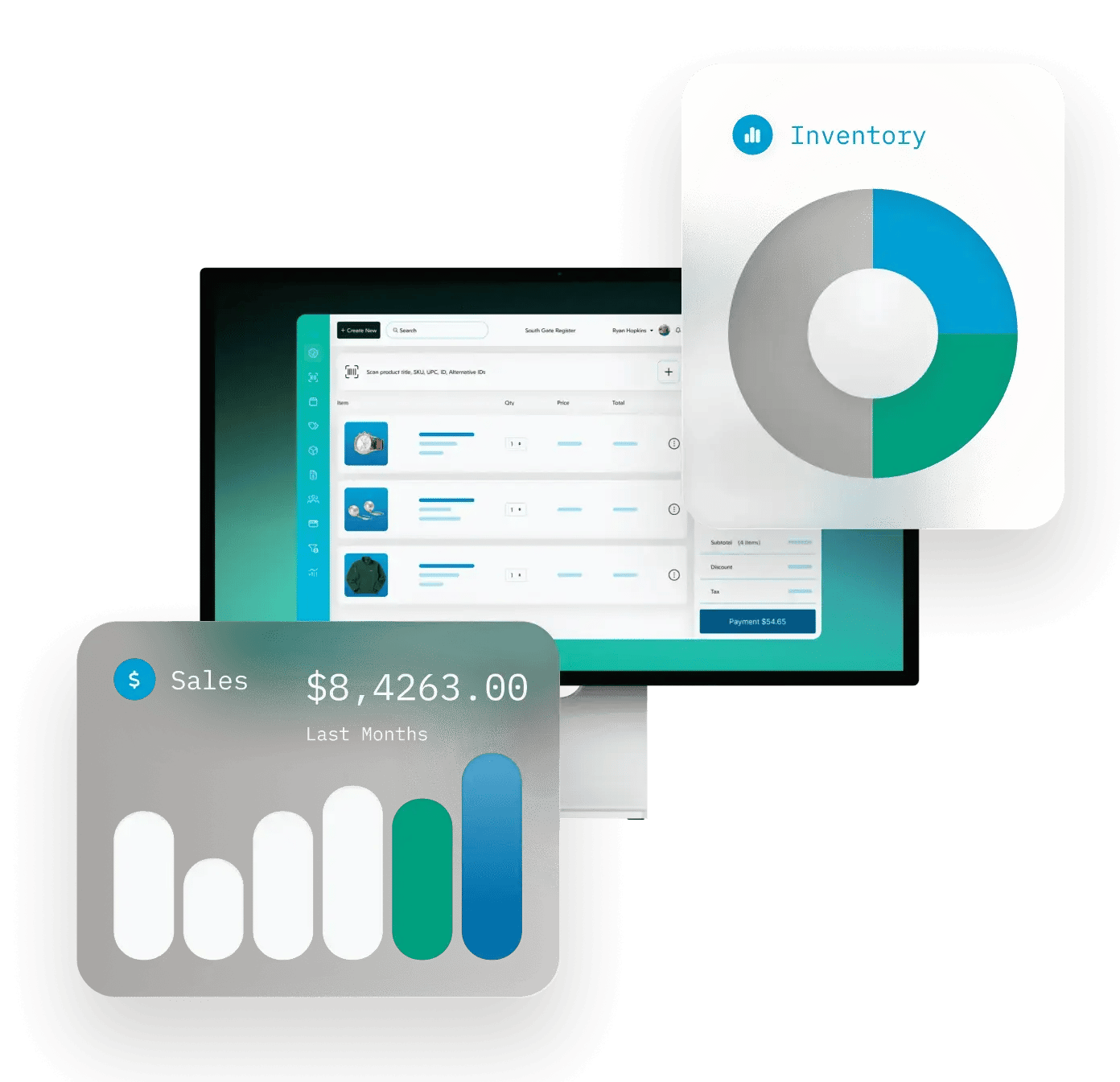
Get data-driven insights on your thrift store's performance
Running a successful thrift store means knowing your numbers — which is why your production management system should include powerful reporting designed for the way you actually work. It should:
- Show what sells fast, what sits too long, and which categories drive the most revenue.
- Monitor donation sources to help you build stronger partnerships and protect your inventory quality.
- Reveal sales performance by department and item type to drive smarter decisions about markdowns, pricing, and marketing.
Keep your team working efficiently
Staff and volunteers need the right tools to keep your thrift store running smoothly. Here’s how your production management system can help:
- Measure productivity metrics like sales per labor hour and items tagged per hour to set realistic goals and allocate staff effectively.
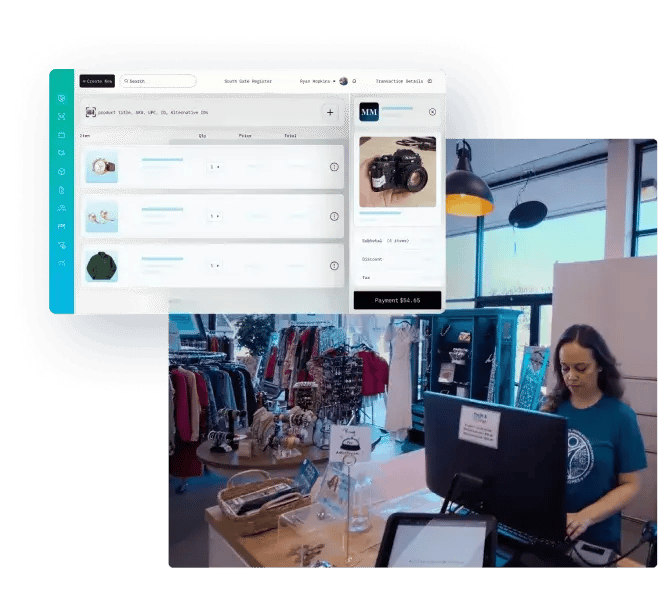
- Offer simple, user-friendly interfaces for donation intake, inventory processing, and checkout — letting new volunteers learn how to use the system in minutes.
- Use role-based permissions and PIN-based access to keep security simple, flexible, and volunteer-friendly.
ThriftCart customer testimonials
Data reporting is obtained in real time for us.
ThriftCart had everything that we needed.
"ThriftCart has allowed us to be more streamlined, more efficient and make that bigger impact that we're wanting to do."
Since implementing ThriftCart, we noticed a big improvement.
"The onboarding and training process was very simple. We were able to schedule these sessions on our own time, so we could work around business and employee scheduling."
ThriftCart has become a key partner.
"The use of ThriftCart reporting has enabled us to track and monitor performance on when and how things sell, what our employees are selling, and how often — and that has really made a difference in our business."
Reporting is very accurate and very easy.
"What we were looking for is good reporting. We switched to ThriftCart because it was more accessible and easier to train."
Thrift store production management FAQs
How does ThriftCart handle inventory tracking for donated items?
With ThriftCart, every item is logged when it enters your store and is automatically removed from inventory when it sells. You always have an accurate count without any manual updates.
How does color-tag discounting work in ThriftCart?
ThriftCart supports colored price tag rotation, which automatically applies discounts to items as they age on the floor. You set the rules, and ThriftCart handles the markdowns without any manual updates.
Can ThriftCart price items by department instead of individual SKU?
Yes. ThriftCart’s department-based pricing lets you apply consistent pricing rules across entire categories, which is far more practical for thrift stores than pricing every item individually.
Does ThriftCart sync online and in-store inventory in real time?
Yes. When an item sells in store, your online inventory updates immediately. When an online order comes in, your in-store count adjusts. You always have one accurate view of your thrift store inventory across both channels.
What kind of reporting does ThriftCart offer for inventory management?
ThriftCart gives you sales reports by department, category, and time period so you can see what sells quickly, what sits too long, and which donation categories drive the most revenue. This helps you make better decisions about floor layout and intake priorities.


