Build your POS
Schedule a demo
Hero Background Image

Epicor vs. ThriftCart:
Which is the best POS for your thrift store?

Epicor Propello powers some of the largest nonprofit thrift chains in North America, including Goodwill of Greater Detroit.

ThriftCart powers the independents, the regionals, and the faith-based shops that don't have an enterprise IT team behind them.

Both serve thrift, but the question isn't which is better. It's which fits the operation you actually run.

Last updated: May 2026
epicor v jewel

In a nutshell:
Epicor vs. ThriftCart

An enterprise platform with a thrift module

Epicor

Epicor Propello is a cloud-based retail management system serving thrift alongside hardware, farm & home, sporting goods, and grocery.

For thrift, it offers donor capture, walk-up donation support, POS roundup, donor receipts, and end-of-day donation reporting. Pricing is quote-only.

Epicor publishes no public rates, though third-party sources cite around $399/month plus $90/terminal.

Implementation typically runs in waves; one large customer rolled out one store per week until the chain was migrated.

Built for thrift, priced for thrift budgets

ThriftCart

ThriftCart is built exclusively for thrift stores, nonprofit resale shops, and faith-based reuse operations.

Donation tracking, pickup scheduling, color-tag cycles, roundup donations, donor tax receipts, and nonprofit reporting are core features rather than a vertical module bolted onto a horizontal platform.

Pricing starts at $99/month, published openly, with no enterprise sales cycle required to find out what you'll pay.


Epicor: Pricing

Hardware

Epicor Propello runs on standard retail hardware, including touchscreen terminals, receipt printers, and barcode scanners.

Specific hardware bundles are configured during the sales process. Third-party sources reference a per-terminal cost of around $90/month, though this isn't published on Epicor's site.

Software

Pricing is quote-based. Epicor doesn't publish monthly rates for Propello on its website, and the tier structure is not publicly documented.

The most widely cited third-party figure is $399/month minimum plus per-terminal fees, but the actual quote depends on your store count, transaction volume, and modules selected.

Expect a discovery call, a needs assessment, and a custom proposal before you see a number.

Contract terms are not publicly disclosed. Implementation services and training are typically priced separately from the software subscription.

Payment processing

Epicor processes payments through partner processors. Specific rates and processor flexibility aren't published.

Confirm during the demo whether you can bring an existing processor or whether you'll be routed through Epicor's preferred partner.

ThriftCart: Pricing

Hardware

ThriftCart is browser-based and works with standard commercial hardware, including barcode scanners, label printers, receipt printers, customer-facing displays, and scanner-scales.

You can configure your setup through the Build and Price configurator.

Software

ThriftCart offers three plans starting at $99/month.

The Startup plan covers basic POS functionality, reporting, SMS marketing, and integrated payments.

Core and Plus add features like donation scheduling, color-based discounting, sell-by-weight, multi-location support, and accounting integrations.

All plans include 24/7 in-house support and onboarding assistance. No separate support fees.

Payment processing

ThriftCart includes integrated payment processing. Rates are transparent.

A single team supports both your POS and your payments, so you don't end up troubleshooting two vendors when something breaks.

What a thrift store owner
actually pays

Epicor's published-by-third-parties starting price of $399/month plus $90/terminal puts a single-register store at roughly $489/month before implementation services.

A 5-store chain at one terminal each clears $2,400/month, before any modules. None of these numbers are confirmed by Epicor publicly.

ThriftCart's Startup plan at $99/month includes integrated payments, reporting, SMS marketing, and 24/7 support out of the box. Core and Plus add thrift-specific tools as the operation grows.

A single-store thrift shop on the Startup plan pays roughly one-fifth what an Epicor-sized quote suggests, and you know the number before you book a demo.

Epicor vs. ThriftCart:
Full feature comparison

*If you encounter inaccuracies or require updates, please contact us.

epicor logo
ThriftCart-logo-svg
Thrift-specific design

Thrift workflows differ enough from general retail that platform-level focus shapes everything downstream.

No
Yes
Donation intake and donor receipts

Logging donated goods, building donor records, and printing tax receipts at intake.

Yes
Yes
Color-tag discounting

Rotating discounts by tag color moves merchandise off the floor without manual reprice work.

none -
Yes
Roundup donations

A checkout prompt asking customers to round up the total generates incremental mission revenue on every transaction.

Yes
Yes
Pickup scheduling

Donor pickups need appointment management, route optimization, and driver assignment in one place.

No
Yes
Sell by weight

Clothing-by-the-pound and bulk goods need the register to price from a scale reading.

Yes
Yes
Non-profit reporting

Board reports, grant applications, and donor metrics need formats that aren't standard retail dashboards.

none -
Yes
Inventory management for donated goods

Donated inventory doesn't arrive with purchase orders, barcodes, or predictable SKUs.

none -
Yes
Offline mode

Internet outages shouldn't stop transactions.

Yes
No
Enterprise scale and large chain support

Running 20+ thrift locations under one nonprofit requires implementation muscle that mid-market tools often lack.

Yes
Yes
Pricing transparency

Knowing what you'll pay before booking a demo affects how nonprofit boards evaluate vendors.

No
Yes
epicor logo
ThriftCart-logo-svg
Thrift-specific design

Thrift workflows differ enough from general retail that platform-level focus shapes everything downstream.

No
Yes
Donation intake and donor receipts

Logging donated goods, building donor records, and printing tax receipts at intake.

Yes
Yes
Color-tag discounting

Rotating discounts by tag color moves merchandise off the floor without manual reprice work.

none -
Yes
Roundup donations

A checkout prompt asking customers to round up the total generates incremental mission revenue on every transaction.

Yes
Yes
Pickup scheduling

Donor pickups need appointment management, route optimization, and driver assignment in one place.

No
Yes
Sell by weight

Clothing-by-the-pound and bulk goods need the register to price from a scale reading.

Yes
Yes
Non-profit reporting

Board reports, grant applications, and donor metrics need formats that aren't standard retail dashboards.

none -
Yes
Inventory management for donated goods

Donated inventory doesn't arrive with purchase orders, barcodes, or predictable SKUs.

none -
Yes
Offline mode

Internet outages shouldn't stop transactions.

Yes
No
Enterprise scale and large chain support

Running 20+ thrift locations under one nonprofit requires implementation muscle that mid-market tools often lack.

Yes
Yes
Pricing transparency

Knowing what you'll pay before booking a demo affects how nonprofit boards evaluate vendors.

No
Yes

What do real thrift store owners say?

Epicor reviews

Epicor Propello holds a 4.0 rating on Capterra. 

Reviewers in adjacent verticals (hardware, farm retail) note ease of training new staff and responsive support on standard issues.

Critical feedback centers on the monthly cost relative to functionality and uneven support quality on complex problems.

Notably, no thrift-store-specific reviews surface on Capterra, which means published peer evidence for thrift fit is limited.

ThriftCart reviews

ThriftCart has a 4.7/5 rating on Capterra.

Reviewers consistently cite the all-in-one workflow as the standout: donations, inventory, color-tag automation, and reporting in one system rather than three.

Volunteer training speed comes up frequently, as does the support team's familiarity with thrift operations rather than retail in general.

Onboarding & support

Switching POS systems is disruptive.
The right support shortens the learning curve and gets you back to selling faster.
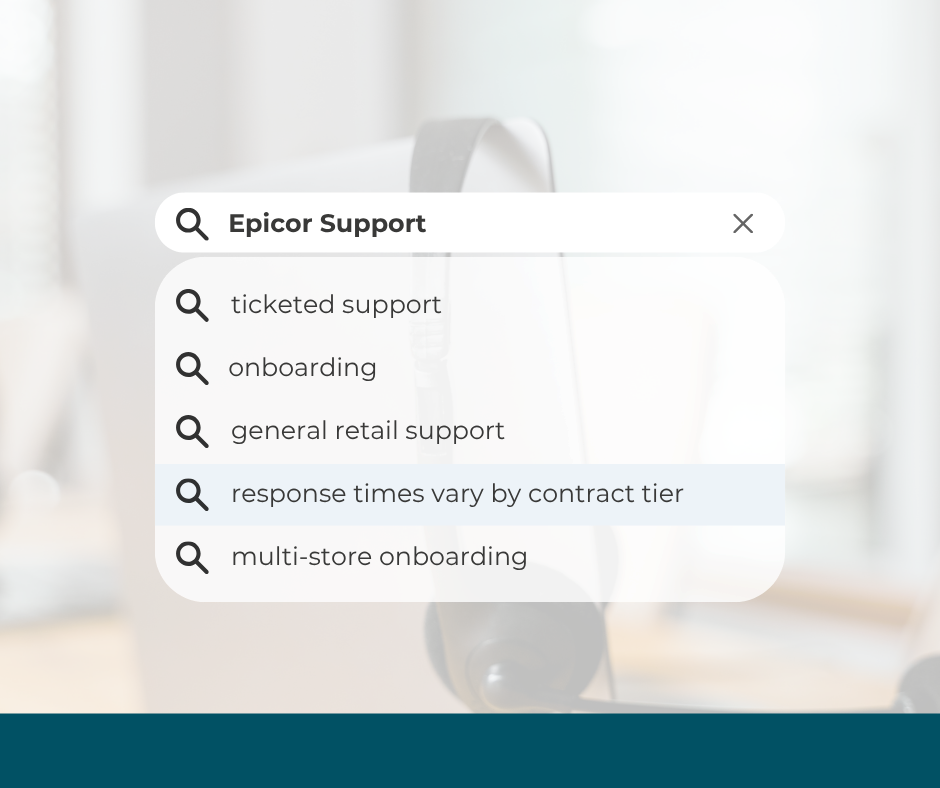
epicor support

Epicor

Epicor onboards customers through its professional services team, with implementation typically scoped per customer and rolled out in waves for multi-store operations.

A documented case study describes a one-store-per-week cadence across a large nonprofit chain.

Support runs through a ticketed system with response times that vary by contract tier.

The support team covers Epicor's full retail portfolio rather than thrift specifically, so thrift-specific configuration questions may take more triage than they would on a vertical-focused platform.

ThriftCart

ThriftCart's onboarding covers inventory import, system configuration, and staff training shaped around your donation intake and pricing cycle from day one.

Implementation runs in weeks rather than months for most independent and regional operators.

Every plan includes 24/7 in-house support, and when you call, you reach someone whose entire focus is thrift store operations rather than a generalist support queue.
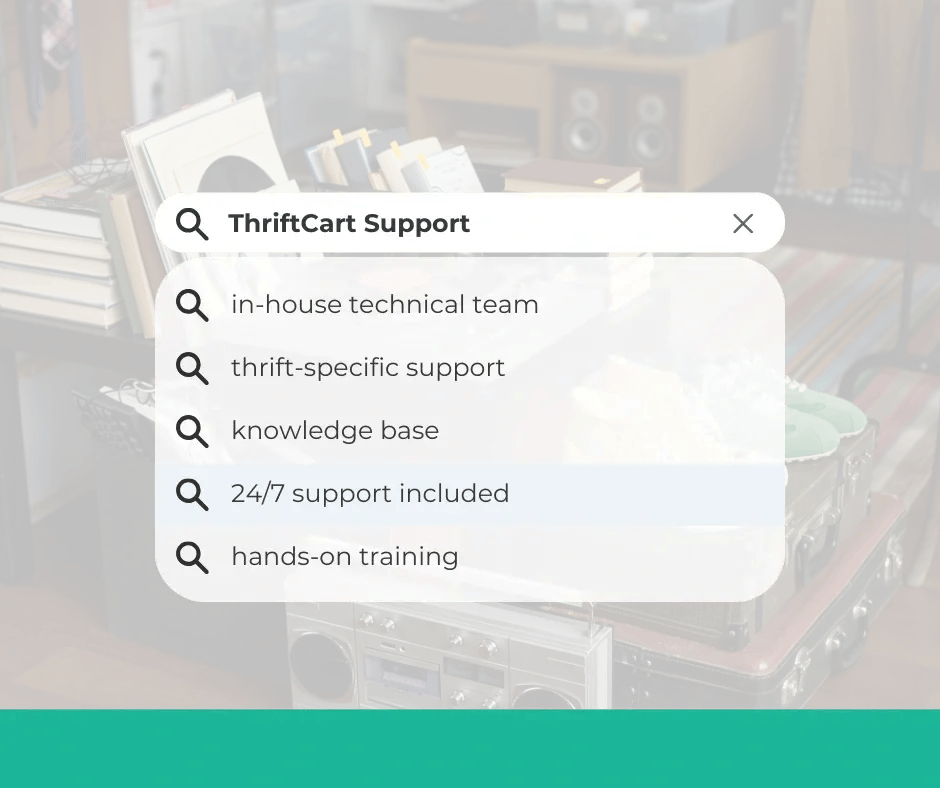
thriftcart support

Which POS system
is right for your thrift store?

Both products serve a purpose.

If you're running a large nonprofit chain with an internal IT team and the budget for enterprise implementation, Epicor has the muscle for that.

If donations, volunteers, and mission revenue are your daily reality, ThriftCart was built for exactly that.

Epicor makes sense if you:

  • Run a 20+ store nonprofit chain with enterprise implementation needs
  • Operate in locations with frequent internet outages where offline POS mode is non-negotiable
  • Have an internal IT team that can manage a multi-vertical platform deployment
  • Are already on Epicor for another vertical and want to consolidate vendors
  • Can absorb a quote-only sales process and a multi-month implementation timeline

ThriftCart makes sense if you:

  • Run an independent or regional thrift, nonprofit resale, or faith-based reuse operation
  • Need donation tracking, donor tax receipts, and pickup scheduling in your POS without custom configuration
  • Want color-tag cycles, roundup donations, and nonprofit reporting working on day one
  • Need to know what you're paying before booking a demo
  • Want 24/7 support from a team that specializes in thrift, not generalist retail

Still comparing?

A comparison page gives you the specs. A demo shows you how the system handles your donations, your color-tag cycle, and your daily flow.

Frequently asked questions

Does Epicor Propello work for thrift stores?

Yes. Epicor markets a thrift-specific module within Propello that includes donor capture, walk-up donation support, POS roundup, and donor receipts.

The platform also serves hardware, grocery, farm & home, and sporting goods retailers, so the product roadmap and support team cover thrift as one of several verticals rather than the entire focus.

How much does Epicor Propello cost for a thrift store?

Epicor doesn't publish pricing on its website. Third-party sources cite a starting cost of around $399/month plus $90/terminal, but Epicor has not officially confirmed those figures. Expect a discovery call before you receive a quote.

ThriftCart's Startup plan costs $99/month with 24/7 support and integrated payments included.

Can ThriftCart handle large multi-store nonprofit chains?

ThriftCart's multi-location module on the Core and Plus plans serves independents and regional operators well.

For 30+ store nonprofit chains with enterprise implementation needs, Epicor's professional services team has a deeper track record of case studies.

The right cutoff depends on your IT capacity and how much custom configuration you need.

Does Epicor offer offline POS mode?

Yes. Epicor Propello includes a documented offline mode that keeps the register running during internet outages.

If frequent connectivity issues are a real concern for your store, confirm with the ThriftCart team how their browser-based platform handles offline scenarios.

How long does implementation take with Epicor compared to ThriftCart?

Epicor implementations are scoped per customer, with published case studies referencing a one-store-per-week rollout for a large chain.

ThriftCart onboarding covers inventory import, configuration, and staff training in weeks rather than months for most independent and regional operators.

Does Epicor include nonprofit reporting?

Epicor's reporting is comprehensive across retail metrics, including donation volume and end-of-day summaries.

Nonprofit-specific formats (mission impact, board-ready summaries, and grant-ready donation reporting) are not surfaced as standard report templates and would typically require configuration.

ThriftCart includes nonprofit reporting templates on every plan.