Youth Homes needed a POS built for thrift inventory
Before ThriftCart, Youth Homes used Shopify.
The platform handled traditional retail, but Youth Homes had to work around it for everyday thrift tasks.
The team needed a color-tag rotation system to keep older inventory moving. Volunteers still wrote merchandise tags by hand. And without reliable reporting, there was no easy way to know whether an item had been on the floor for a week or a month.
“We had no visibility on how long things had been on the shop floor and how quickly they were selling.”
ThriftCart gave 60+ volunteers a simpler way to work
Youth Homes needed its volunteer team to learn the new system quickly.
The organization worked with a dedicated ThriftCart onboarding specialist to set up color-tag rotation and barcode production. The team also held separate training sessions for backroom volunteers and front-of-house cashiers.
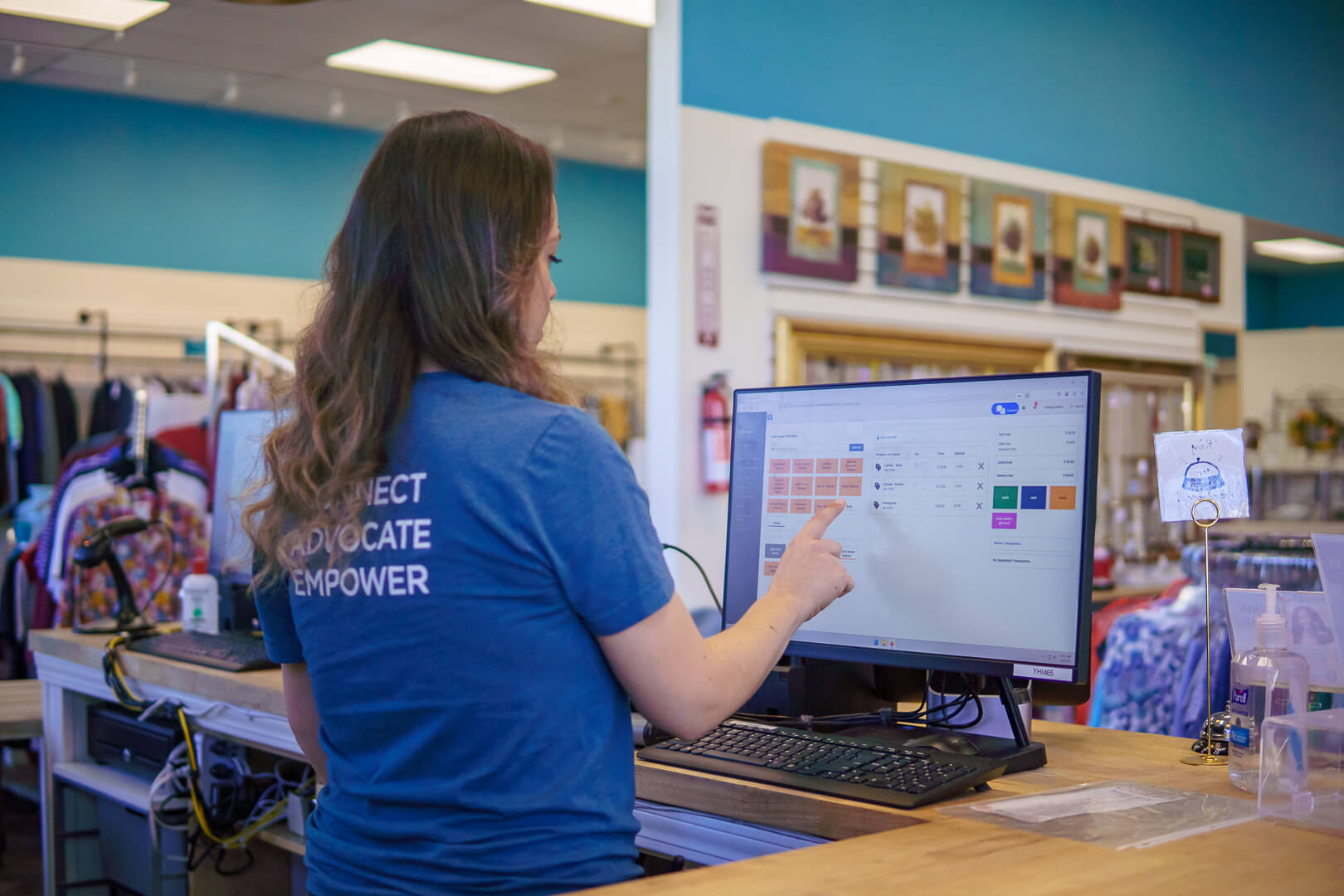
Volunteers can now choose a tag color, select a department, print a barcode, and move on to the next item.
That process replaced handwritten tagging and made it easier for volunteers with different levels of comfort using technology to work in the same system.
“There was a lot of hesitancy to switch to a new program at first, but I can speak on behalf of all of our volunteers that we do not want to go back.”
Barcode tagging helped Youth Homes process 1,000 items in about two hours
Youth Homes volunteers used to write merchandise tags by hand.
With ThriftCart, they can print 50 barcode tags in under 30 seconds.
During one roughly two-hour production session, the team tagged around 1,000 pieces of clothing. Kaitlyn said the shop couldn’t have processed that volume before ThriftCart.
Faster tagging helps the team move more donated inventory out of the backroom and onto the sales floor.